Recipes

Cream Scones vs. Butter Scones: A Side-by-Side Comparison
Put two scones on a plate and most people can tell them apart without being told which is which. One breaks open with a soft, even crumb. The other shatters into buttery flakes. The difference comes down to a single decision made before the flour hits the bowl: cream or butter.
Both are real scones, and both are worth baking. The question is which one suits the morning you have in front of you, and what you plan to put on top. Here is how each method behaves, where it shines, and how to pick between them.
The Core Difference: One Fat, Two Jobs
Cream scones use heavy cream as both the liquid and the fat. There is nothing else to add beyond the dry ingredients and whatever you fold in. The dough comes together with a few turns of a spoon, gets patted out, and is cut. That is the whole recipe.
Butter scones split those jobs in two. Cold butter goes into the flour first, rubbed or grated in until the pieces are somewhere between pea and walnut size. Then a separate liquid — milk, buttermilk, or a splash of cream — brings the dough together. Those butter flecks melt in the oven and leave steam pockets behind, and those pockets are what make a scone flaky.
So the choice is not really a flavor question. It is a question of what you want the structure of the scone to do.
Texture and Crumb, Side by Side
A good cream scone is tender and slightly cakey. The crumb is close and even, the edges soft rather than crisp, and the whole thing feels rich and a little dense in a pleasant way. Because there are no butter layers to separate, it holds together well — good news if you are splitting and filling scones for a crowd.
A good butter scone is flakier and more layered. Cut one in half and you may see distinct strata, like a rough puff pastry. The top browns more deeply, the edges get crisp, and the interior stays light. It also rises a touch higher, since steam does much of the lifting.
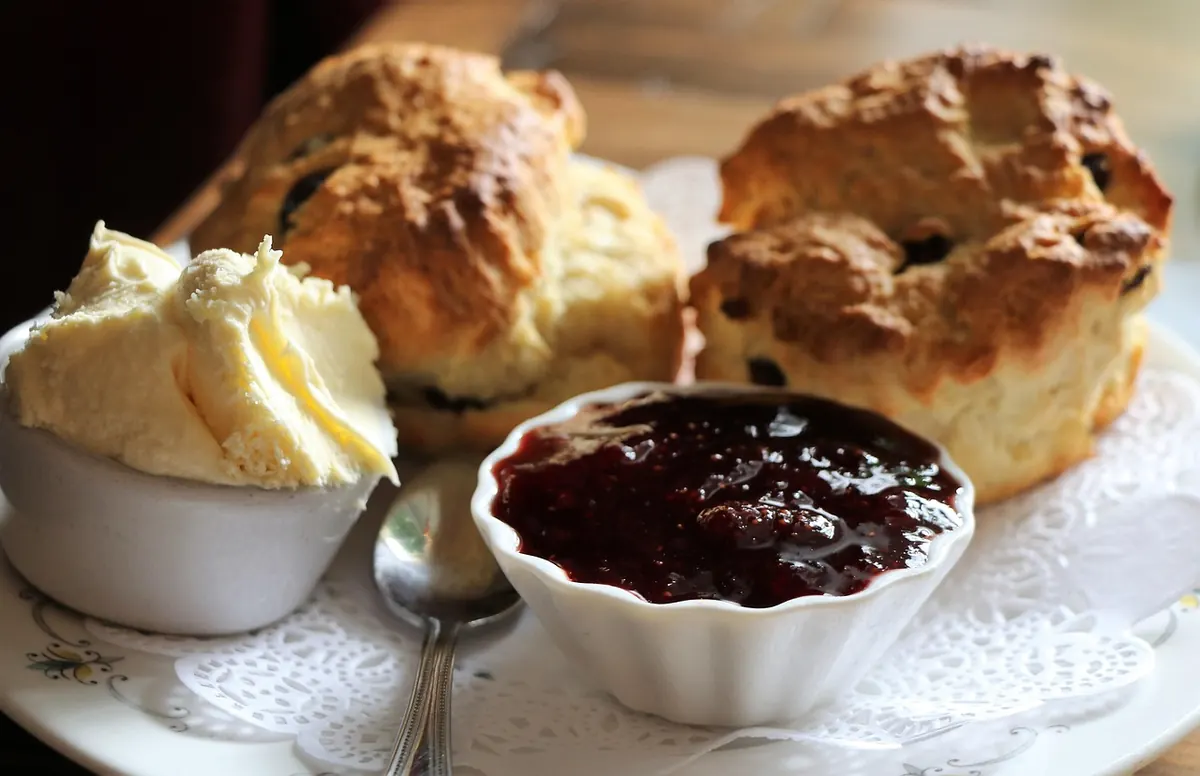
Neither is better. A cream scone with clotted cream and jam is a soft, spoonable pleasure. A butter scone with the same toppings gives you crunch and contrast. If you have ever been disappointed by a scone that tasted like a sweet biscuit, you were probably eating a butter scone handled too roughly, with the butter melted long before it reached the oven.
The temperature rule behind both
Butter scones demand cold. Grate frozen butter on a box grater, toss it through the flour, and get the dough into the oven before the pieces soften. Cream scones are far more forgiving. The cream can come straight from the fridge, and the dough can sit for a few minutes without disaster.
Flavor: Where the Two Diverge
Cream scones taste like dairy and vanilla, clean and gently sweet. The cream carries whatever you add — lemon zest, orange, dried cherries, a little cardamom — without competing with it. They are also the better choice when you plan to pile on toppings, because the scone itself stays in the background.
Butter scones taste unmistakably of butter, especially if you use a cultured or European-style butter. That richness is a gift with savory versions: cheddar and chives, rosemary and black pepper, bacon and scallion. It is also why butter scones tend to need a touch more sugar than cream scones to feel balanced as a sweet.
One practical note: if your butter scones taste flat, the problem is usually salt, not butter. A half teaspoon of fine salt in two cups of flour is the baseline. If you are using salted butter, dial the added salt back rather than cutting it out entirely.
Difficulty: Which One Is Easier to Get Right?
Cream scones are the easier bake, and it is not close. There is no cutting in, no worrying about warm hands, no risk of butter melting into the flour and turning the dough greasy. You stir, you pat, you cut, you bake. For a first attempt at scones, start here.
Butter scones ask more of you, but the extra effort pays off in texture. The main hazards:
- Warm butter. If it smears instead of staying in distinct pieces, you lose the flakes. Work quickly, use cold equipment, and chill the dough for 15 minutes before cutting.
- Overworking. The more you knead, the more gluten develops and the tougher the scone gets. Stop when the dough just holds together.
- Too much liquid. Add milk a tablespoon at a time. A shaggy, slightly dry dough is better than a sticky one.
- Twisting the cutter. Press straight down and lift. A twist seals the edges and stops the rise.
Both methods share one rule: handle the dough as little as possible. That single habit matters more than which fat you chose.
How to Choose, Based on What You Are Doing
A quick guide:
- Choose cream scones if you want scones on the table in 25 minutes, you are baking with kids or a crowd, you are serving them with jam and cream, or you want a soft texture that holds up to splitting and filling.
- Choose butter scones if you want flaky layers and crisp edges, you are making a savory version, you are baking for people who notice texture, or you have time to chill the dough.
A basic ratio for each
Cream scones: 2 cups (250 g) all-purpose flour, 1 tablespoon baking powder, 1/2 teaspoon fine salt, 3 tablespoons sugar, and 1 1/4 cups (300 ml) cold heavy cream. Stir until just combined, pat to about 1 inch thick, cut, and bake at 400°F (200°C) for 15 to 18 minutes.
Butter scones: the same dry ingredients, plus 8 tablespoons (113 g) cold butter cut or grated in, and 2/3 to 3/4 cup cold milk or buttermilk. Same thickness, same oven, same timing — expect a bit more browning on top.
A Practical Way to Decide
Bake one batch of each on the same morning and taste them side by side while they are still warm. Note which one you preferred with butter, which held up better the next day, and which you would actually repeat. Scones stale quickly, so plan to eat them within a day — or freeze the cut rounds unbaked and bake them straight from the freezer, adding a couple of minutes to the time.
Most bakers end up keeping both in rotation: cream scones for the easy weekday batch, butter scones when there is time to be careful. If you only ever make one, make the one you will genuinely bake on a Saturday morning. That is the better scone.
Photo: leegenhyung / Pixabay